
Lead (Saturn)
Lead (Saturn), plumbum, is the heavy fusible metal whose glyph ♄ marks both common Pb and the black nigredo of the Magnum Opus.
♄ · Chem: Pb- Chymical Order
- III · Seven Planetary Metals
- Latin Term
- Plumbum / Saturnus
- Unicode
- U+2644
- Modern Chemistry
- Pb
- Planetary Sphere
- Saturn
- Magnum Opus Stage
- Nigredo
Lead (Saturn), Latin plumbum or Saturnus, is the dense, soft, low-melting metal that Renaissance chymists set under the cold, slow planet. The sign ♄ (U+2644) places a cross beneath a crescent, a compact figure of weight, melancholy, and corruptible matter. In furnaces and emblem books the same name covered ordinary lead and the blackened subject of the work.
I.Glyph Geometry, Unicode & Scribal Variants
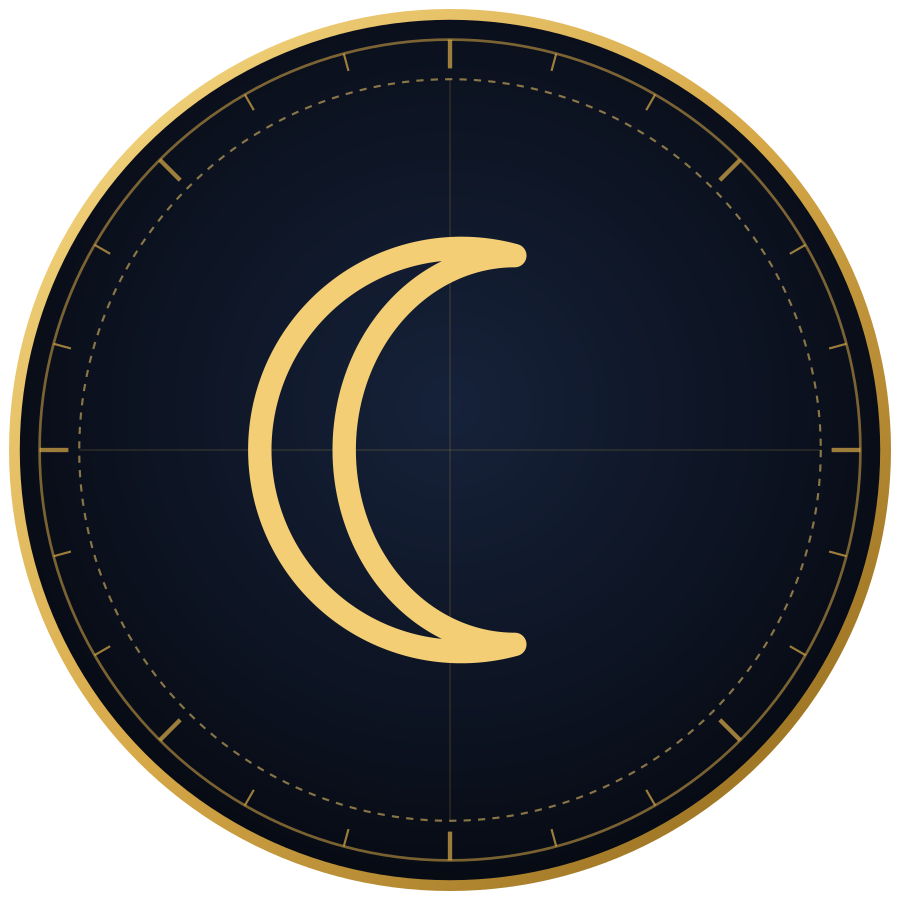
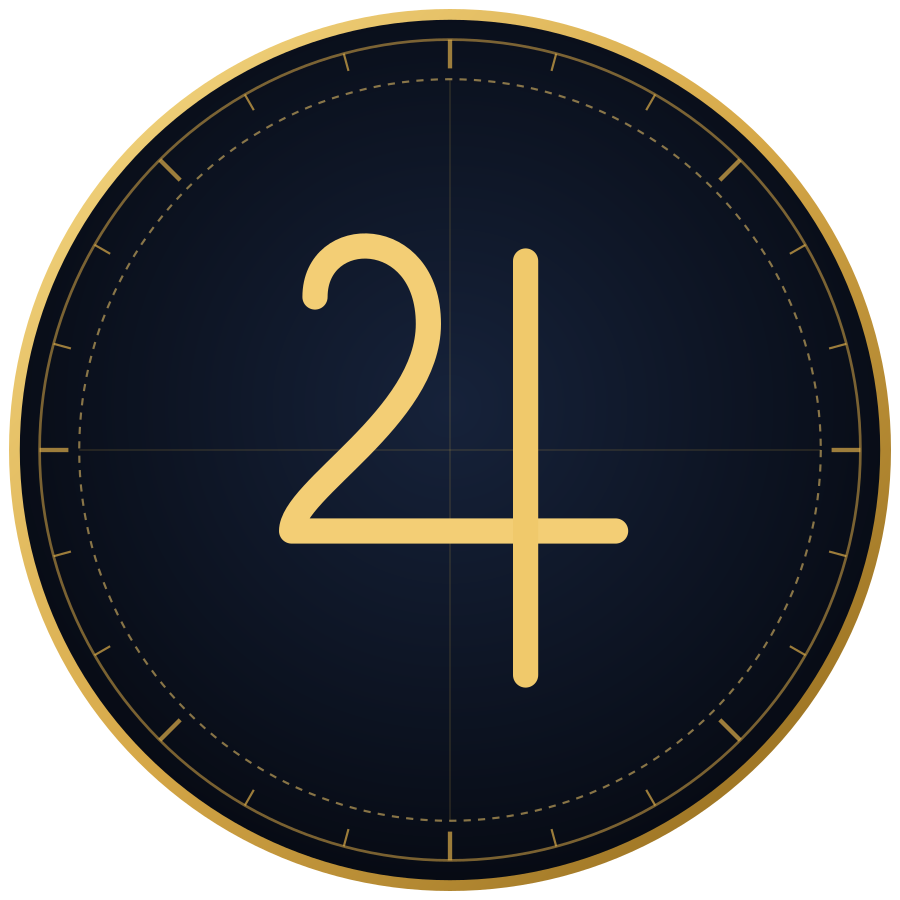
The Saturn glyph ♄ is built from two strokes: a lower Greek cross and an upper crescent whose horns rise from the crossbar or from a short stem above it. The cross supplies the terrestrial, fixed pole; the crescent, borrowed from the lunar sign, supplies receptivity and a capacity to receive influence. Scribes vary the join. Some seat the crescent directly on the horizontal arm; others insert a neck so the moon floats clear of the cross; still others thicken the crescent into a nearly closed hook. Newton’s laboratory signs follow the floating-crescent type common in seventeenth-century English notebooks, while Gessmann’s plates gather medieval variants in which the crescent is flattened, inverted in orientation relative to the page, or reduced to two short arcs. The sign must be kept apart from Jupiter ♃, whose cross stands above a leftward curve, from Venus ♀, a circle over a cross, and from the plain lunar crescent ☽, which lacks the cross entirely. In running chymical script the Saturn mark is often smaller than planetary labels in astronomical tables and may be ligatured to abbreviations for calx, sugar, or acetate of lead.
II.Laboratory Chymistry & Material Properties
In the workshop lead was known by weight, softness, and a melting point low enough for an ordinary charcoal furnace. Freshly cut or just poured, it shows a bluish silver skin that dulls to gray as air forms a thin oxide film. Assayers cupelled argentiferous lead on a porous bone-ash cupel: the metal oxidized, the litharge was absorbed, and a silver or gold bead remained. Mineral sources included galena, often roasted to oxide and reduced with charcoal, together with cerussite and secondary ochres. Products had stable trade names: litharge and massicot (oxides), minium (red lead), white lead or ceruse made by corroding sheets in vinegar vapor, and sugar of lead, the sweet acetate prepared with distilled vinegar. Apparatus was ordinary rather than allegorical: iron or clay melting pans, cupels, alembics for vinegar, and wooden or leaden troughs for cementation. Operators noted that lead alloys readily with tin and copper, that its oxides color glass, and that fumes and sweet salts are injurious—practical cautions recorded long before a modern toxicology of Pb.
III.Hermetic Correspondence & Planetary Doctrine
Planetary correspondence assigned lead to Saturn: outermost of the ancient planets, cold and dry in the dominant humoral reading, slow in motion, and linked with melancholy, old age, boundaries, and time. Aristotelian matter theory treated the metal as earthy and watery in mixture, heavy because dominated by the cold elements, fusible because not fully fixed like stone. Paracelsian writers recast that mixture as a salt–sulfur–mercury complexion in which a gross sulfur and a sluggish mercury leave the body dark, soft, and prone to putrefaction. Symbolic polarity is therefore double. Saturn is the prison and the threshold: base, poisonous, and melancholic, yet the prima materia in which the work must begin, because only what can blacken and lose its form can be rebuilt. Emblematic lead is the scythe, the crow, the tomb, and the old king—images of cutting away and of necessary death—set against solar gold as the metal that must be humbled before it can be raised.
IV.Historical Treatises, Papyri & Emblem Books
Greco-Egyptian technical papyri already record lead in solders, alloys, and ointments, and Zosimos of Panopolis folds metallurgical operations into a language of death and revivification without yet fixing the later planetary canon. Medieval Arabic authors, above all Jābirian and related corpus texts transmitted in Latin as Geber, treat lead and its calces as materials for assaying and for the production of spirits and salts. Latin books of secrets and metallurgical handbooks then stabilize the Saturn name beside plumbum in recipe headings and symbol lists. Paracelsus and his editors use Saturn both for the planet and for lead preparations in chemical medicine. Early seventeenth-century emblem books make the identification public: Michael Maier’s Atalanta Fugiens (1618) stages Saturnine episodes—devouring, blackening, washing—beside epigrams and fugues, while images gathered under titles such as the Basilica Philosophica display crowned or scythe-bearing Saturn as lord of the black stage. Newton’s unpublished notebooks continue that manuscript habit, recording quantities of lead, antimony, and their salts under the old signs rather than under a modern element name.
V.Role in the Magnum Opus & Laboratory Operations
Within the Magnum Opus, Saturn governs nigredo, the blackening in which a metal or a prepared body loses color, coherence, and outward form. Operational sequences often begin by melting lead, calcining it to litharge or minium, or alloying it with antimony or copper so that a regulus or a dark scoria appears. The black mass—crow, raven, or tomb—is then washed, imbibed, or digested until whiteness (albedo) emerges. Chymical authors insist that this blackness is not mere soot but a regulated putrefaction: too fierce a fire vitrifies or drives off volatile parts; too mild a fire leaves the body unchanged. Lead’s easy fusibility made it a practical solvent and a carrier in cupellation and in some amalgamation-like fusions, while its oxides supplied colored calces whose reduction back to metal was read as death followed by rebirth. Nigredo is therefore both a laboratory color sequence and the moral figure of mortification that later stages presuppose.
VI.Transition to Modern Chemistry & Cultural Legacy
Eighteenth- and nineteenth-century notation stripped planetary names from the metals. Lavoisier’s reform treated plomb as a simple metallic substance entering oxides and salts by weight, and Berzelius’s alphabetic system replaced ♄ with Pb, from Latin plumbum. Modern chemistry identifies lead as element 82, a soft, dense, low-melting heavy metal whose freshly cut surface is silvery blue and soon gray; three of its isotopes close major decay chains, and it is the highest-atomic-number element with stable isotopes. Unicode keeps the historical sign available: ♄ is U+2644 in the Miscellaneous Symbols block, while the Alchemical Symbols block opened at U+1F700 in Unicode 6.0 encodes further manuscript forms, including signs for lead and lead ore, so that scholarly transcription need not invent ad hoc characters. The reform separated assay numbers from planetary myth without erasing the glyphs as historical data.
FAQ — Lead (Saturn)
What does the Lead (Saturn) symbol mean in chymical texts?
The sign ♄ names both the metal lead and the planet Saturn. In recipes it labels lead, its oxides, and sometimes Saturnine salts; in emblematic works it also marks melancholy, time, and the black stage of the opus. Context decides whether a given occurrence is a material, a planet, or both at once.
How is Unicode U+2644 drawn, and how does it differ from similar signs?
U+2644 SATURN is a cross with a crescent above it, horns upward. Jupiter places the cross over a curved hook, Venus places a circle over a cross, and the Moon is a crescent alone. Scribes may float the crescent on a short stem or seat it directly on the crossbar.
How did laboratory lead chemistry differ from Saturnine symbolism?
Assayers and pigment-makers melted galena-derived lead, cupelled it, and made litharge, minium, ceruse, and sugar of lead with ordinary furnaces and vinegar. The same substances were then read as Saturn’s body and as the black prima materia. The operations are metallurgical; the planetary names are an interpretive layer, not a substitute for weights and fires.
References
- Wikipedia: Lead — Wikipedia Contributors (Wikimedia Foundation, 2026) · 2026-11-12The Wikipedia summary documents lead as element Pb, atomic number 82, a soft dense metal of low melting point that tarnishes from bluish silver to dull gray and terminates major decay chains.
- Die Geheimsymbole der Chemie und Medicin des Mittelalters — Gustav Wilhelm Gessmann (Verlag des Verfassers (Graz / München), 1899)Gessmann’s Die Geheimsymbole der Alchemie (1899) classifies Plumbum and Saturnus among medieval chemical sigils, reproducing cross-and-crescent variants used for the metal and the planet.
- The Secrets of Alchemy & Unicode Standard Block U+1F700 (Alchemical Symbols) — Lawrence M. Principe / Unicode Consortium (University of Chicago Press / ISO/IEC 10646, 2013) · 2026-11-12Unicode places SATURN at U+2644 and opens the Alchemical Symbols block at U+1F700, while Lawrence Principe’s history of alchemy treats Saturnine lead as both a real laboratory metal and a cover for the nigredo.
Related
Updated: · Editor: Tabula Chymica Editorial Archive